
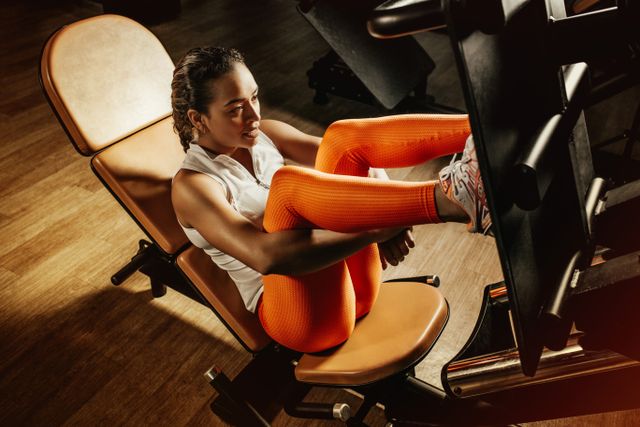
Why is stretching after exercising so important?
Targeted post-workout stretching helps to restore muscle length after heavy compound lifts. Without proper stretching, your muscles can stiffen, making it harder to move them through their full range of motion. This can lead to injuries and daily discomfort.
Finishing a heavy lower-body session feels rewarding, but the stiff, aching feeling that sets in hours later is a different story. Heavy squats, lunges, and deadlifts place massive stress on your posterior chain. Without proper recovery, tight gluteal muscles can pull on your pelvis, limit hip internal and external rotation, and lead to persistent lower back or hip discomfort.
“A major mistake active individuals make is treating glute recovery as an afterthought,” explains Mandeep Hayer, Physiotherapist and founder of Hayer Health. “When your glutes remain hypertonic after heavy lifting, your hips lose their functional range of motion. That forces your lumbar spine to absorb forces it was never designed to handle, which is why post-leg day back tightness is so common.”
At Hayer Health, our clinical team frequently sees athletes and active individuals whose hip and back issues stem directly from neglected post-workout mobility. Spending just 5 to 10 minutes cooling down after leg day can significantly reduce delayed onset muscle soreness (DOMS) and preserve joint longevity.
Below are four simple, highly effective glute stretches you can easily perform at home without any specialized gym equipment.
Figure-4 Stretch
The Figure-4 stretch is one of the safest and most adjustable movements for targeting the gluteus maximus and deep hip rotators without placing undue strain on your lower back.
How to do it: Lie on your back with your knees bent and feet flat on the floor. Cross your right ankle over your left knee, forming a figure “4” shape. Reach your hands around your left thigh and gently pull it toward your chest until you feel a deep stretch in your right glute.
Duration: Hold for 30 to 45 seconds per side.
Pro Tip: Refrain from letting the knee of your crossed leg turn inwards towards your chest. Try to rotate it outwards so it points straight out to the side.
Pigeon Pose
A classic yoga posture, the Pigeon Pose delivers an intense stretch across the outer glute and piriformis, making it an excellent option after heavy squatting or sprinting sessions.
How to do it: Start in a tabletop or high plank position. Bring your right knee forward and place it behind your right wrist, positioning your right ankle near your left hip. Extend your left leg straight back behind you with your hips square to the floor. Lower your torso down over your front leg as far as comfortable; you may remain on your palms or come down to your elbows depending on your flexibility.
Duration: Hold for 30 to 60 seconds per side while taking deep, slow breaths.
Pro Tip: “Pigeon Pose is fantastic for deep tissue lengthening, but proper hip alignment is critical,” says Mandeep. “If you feel your body tilting to one side, you are compensating rather than stretching the target tissue. Support your hip with a yoga block or pillow so your pelvis stays square to the floor.”
Seated Spinal Twist and Glute Stretch
This stretch targets the gluteus medius and piriformis while gently rotating the thoracic spine to relieve tension throughout the entire back.
How to do it: Sit on the floor with both legs extended straight out. Bend your right knee and step your right foot over your left leg, placing it flat on the floor beside your left knee. Hug your right knee toward your chest with your left arm and gently rotate your upper body to the right.
Duration: Hold for 30 to 45 seconds per side.
Pro Tip: Never slump into the spine when turning your torso. Instead, focus on lengthening your spine upward toward the ceiling before starting to rotate.
Seated Butterfly Stretch
While primarily opening the inner thighs and adductors, the Butterfly Stretch relieves deep hip capsule tension that directly restricts full glute lengthening after heavy lower-body training.
How to do it: Sit upright on the floor, bend your knees, and bring the soles of your feet together in front of you. Hold your feet or ankles with your hands, keep your spine tall, and gently hinge forward at your hips, lowering your chest toward your feet.
Duration: Hold for 45 to 60 seconds.
Pro Tip: Focus on hinging from your hip joints with a flat back rather than rounding your upper back to lower your head.
Why Glute Recovery Matters for Injury Prevention
The gluteal complex consists of three main muscles: the gluteus maximus, gluteus medius, and gluteus minimus. Together with the underlying piriformis and deep lateral rotators, these muscles stabilize your pelvis and drive every step, jump, and lift you perform.
When glute muscles remain chronically tight following high-intensity training, several issues can develop:
- Lower Back Compensation: Tight glutes prevent your hips from moving through their full range of motion. As a result, your lower back is forced to flex excessively during bending or lifting motions to compensate.
- IT Band and Knee Irritation: A hypertonic gluteus medius or tensor fasciae latae (TFL) pulls directly on the iliotibial (IT) band, contributing to outer knee pain commonly seen in runners and lifters.
- Altered Gait and Stride: In sports or daily life, restricted hip extension shortens your stride length and forces surrounding muscles like the hamstrings to work harder than necessary.
Combining Stretches with Multidisciplinary Care
While home stretching routines are essential for daily maintenance, persistent stiffness or localized hip pain often requires professional clinical care.
At Hayer Health, our practitioners work together to address hip and glute dysfunction from every angle:
- Physiotherapy: Evaluates hip joint capsule mobility, identifies muscle imbalances, and utilizes techniques like dry needling (IMS) to release stubborn myofascial trigger points in the gluteal complex.
- Registered Massage Therapy (RMT): Provides targeted deep tissue work to break down scar tissue and alleviate hypertonicity in overloaded hip muscles.
- Kinesiology: Focuses on functional active recovery. We design personalized mobility and strengthening protocols to ensure your glutes fire efficiently during compound movements without fatiguing prematurely.
Frequently Asked Questions (FAQ)
What are the benefits of using a massage device for tired leg muscles?
Massage guns and compression boots use percussive or pneumatic therapy to increase local blood flow, accelerate metabolic waste removal, and relieve muscle tightness after heavy training. These targeted devices help reduce delayed onset muscle soreness (DOMS), restore tissue elasticity, and calm hypertonic nervous system responses.
How do I use a foam roller for leg muscles?
Foam rollers can help increase circulation surrounding tight muscles and release tension. Position the foam roller under major muscle groups like your quads, hamstrings, glutes, or calves, supporting your body weight with your arms. Slowly roll back and forth along the length of the muscle belly for 30 to 60 seconds per zone. When you find a tender spot or trigger point, pause for 20 to 30 seconds to allow the tissue to release. Avoid rolling directly over bony prominences or joint capsules.
What are the symptoms of a serious leg injury?
Seek immediate medical evaluation if you experience an inability to bear weight on the leg, sudden and severe localized pain, visible joint deformity, rapid or extreme swelling, or a popping sound at the moment of injury. Symptoms such as severe numbness, tingling in the foot, cold or pale skin, or sharp pain accompanied by localized warmth and redness in the calf can indicate nerve damage or deep vein thrombosis and require urgent emergency attention.