What causes ice hockey injuries?
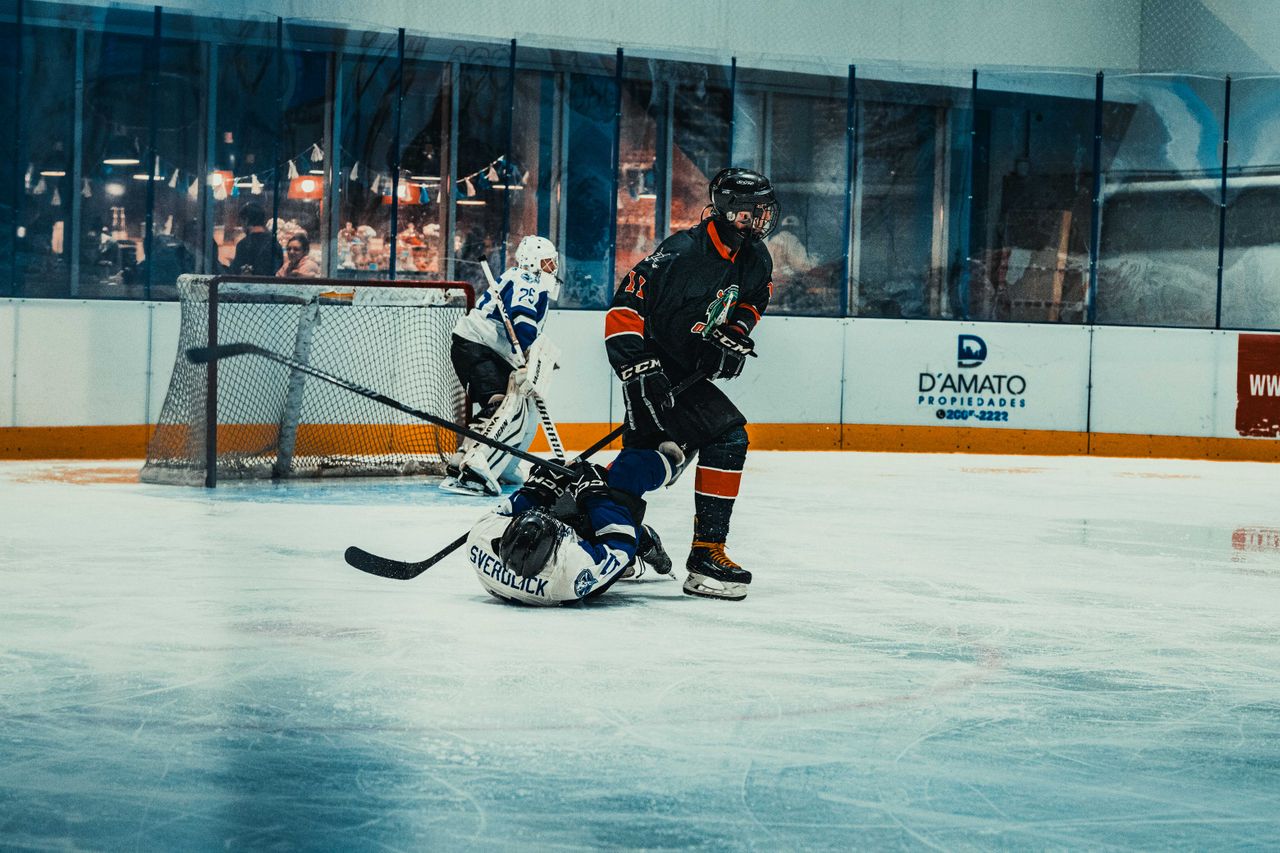
High-speed collisions, board checks, puck impacts, and explosive lateral skating strides are the core causes of common ice hockey injuries. These include Lower body strains (groin and knee), upper extremity trauma (shoulder separations), and concussions. The most effective rehabilitation plans typically combine physiotherapy, kinesiology, massage therapy, and osteopathy with continuous objective testing to accelerate return-to-play timelines.
Ice hockey is one of the fastest, most demanding sports in the world. The combination of high velocities, heavy physical contact, and hard pucks creates an environment where physical stress is constant. Whether you play in a recreational league or compete at the university or professional level, dealing with ice hockey injuries is often an inevitable part of the game.
At Hayer Health, our clinical perspective goes beyond standard textbooks. Our team includes Manraj, a kinesiologist who played both university and professional hockey. Having personally navigated an array of major hockey injuries, Manraj brings athlete-centered insight from his own lived experience to our rehabilitation programs.
Below, we break down the most common ice hockey injuries, explore a real-world elite athlete case study, and share proven prevention strategies to keep you on the ice.
Upper Body Ice Hockey Injuries
Acromioclavicular Joint Injury (Separated Shoulder)
The acromioclavicular (AC) joint sits at the top of the shoulder where the collarbone meets the shoulder blade. A shoulder separation usually happens when a player is checked, driven sideways into the boards or driven shoulder-first into the ice.
Symptoms: Acute localized pain on top of the shoulder, swelling, limited overhead mobility, and a visible bump in severe cases.
Rehab Focus: Restoring joint mechanics through specialized physiotherapy services, progressive rotator cuff strengthening, and scapular stabilization.
Shoulder Labral Tears and Dislocations
High-energy checks can force the head of the humerus out of its socket, causing a glenohumeral dislocation or tearing the labrum (the cartilage ring supporting the joint). These structural injuries often require surgical repair followed by intensive rehab before an athlete can safely return to contact.
Symptoms: Deep shoulder pain, a sensation of popping or catching, joint instability, numbness in the arm, and reduced pushing power.
Rehab Focus:Restoring joint stability through targeted rotator cuff conditioning, manual therapy, and neuromuscular training. Post-surgical cases require a carefully staged range of motion goals followed by sport-specific strength testing.
Hand and Finger Fractures
Blocking slapshots is a brave play, but it frequently results in fractured fingers or metacarpal bones. High-impact puck strikes or slashes can crush bones through hockey gloves, requiring immobilization and hand therapy to restore grip strength and dexterity.
Symptoms: Instant sharp pain upon impact, rapid swelling, bruising, inability to bend the finger, and severe grip weakness.
Rehab Focus: Protecting the bone during initial healing, followed by progressive joint mobilization, hand therapy, and targeted exercises to restore grip strength. Having suffered a fractured finger from blocking a slapshot from Seth Jones during his junior career, Manraj knows how delicate the timeline is between protecting the fracture and restoring the grip strength needed to hold and control a stick efficiently.
Lower Body Ice Hockey Injuries
Lower extremity trauma accounts for 27% to 53.7% of all reported ice hockey injuries. The unique stride mechanics of skating place immense stress on the hips, knees, and ankles.
Groin and Adductor Tendon Strains
The skating stride forces the hip adductor muscles to contract eccentrically to slow the leg down during full extension. Over time or during sudden direction changes, this strain can tear muscle fibers or tendons. Severe adductor tendon tears may require surgical repair.
Symptoms: Sudden sharp pain or cramping in the inner thigh/groin, pain when bringing legs together, stiffness during cross-over strides, and localized swelling.
Rehab Focus: Controlling acute inflammation, rebuilding eccentric adductor strength with progressive loading, and using active kinesiology to correct hip stride mechanics before returning to full-velocity skating.
Medial Collateral Ligament Tears
The knee is vulnerable to contact forces from the outside (valgus pressure), especially when the skate blade is stuck in the ice. Medial collateral ligament (MCL) sprains are among the most frequent knee injuries in hockey, requiring structured stability training to protect the joint.
Symptoms: Pain and tenderness along the inside of the knee, localized swelling, feeling of knee giving way during lateral cuts, and stiffness.
Rehab Focus:Early brace support if needed, swelling management, quadriceps reactivation, and multi-directional stability training to protect the ligament under lateral forces.
Fractures and High Ankle Sprains
Ankle fractures and high ankle sprains occur from severe twisting inside the skate boot or high-velocity puck impacts.
Symptoms:Severe lower leg or ankle pain, immediate bruising, inability to put weight on the foot, and extreme stiffness when flexing the foot up.
Rehab Focus:Restoring full ankle dorsiflexion, strengthening the peroneal and calf musculature, and performing objective force testing. From dealing with a fractured ankle during his own playing days, Manraj emphasizes to our patients that regaining full ankle joint mobility is essential before putting weight back into a rigid hockey boot.
Head and Neck Injuries
Head and neck trauma require immediate, expert clinical care. Research shows that head and facial contact accounts for nearly 39% of match-related injuries in competitive hockey leagues.
Concussions
A concussion occurs when a direct blow to the head, neck, or body causes the brain to move rapidly inside the skull.
Symptoms: Dizziness, light sensitivity, brain fog, nausea, and headache.
Rehab focus: Recovery requires a structured, multi-step return-to-play protocol. Our team utilizes evidence-basedconcussion and vestibular rehabilitation to safely guide athletes through symptom resolution, gaze stability exercises, and sport-specific physical exertion.
Client Case Study: Returning a Pro Athlete to the Ice
To demonstrate how comprehensive rehab works in practice, consider a case from our clinic involving a 32-year-old professional hockey player.
During the off-season in the summer, the player underwent two major surgeries:
- Shoulder labral tear repair
- Adductor tendon repair (groin muscle)
Facing two major post-surgical rehab tracks simultaneously required a carefully synchronized, collaborative strategy. Rather than working in isolation, our entire team at Hayer Health collaborated on a single care plan:
Early Phase (Pain & Swelling Management): Our physiotherapists and osteopathic practitioners worked strictly within surgeon-guided movement restrictions to reduce swelling, promote joint alignment, and control acute pain.
Manual Therapy & Targeted Care: We integrated dry needling (IMS/Acupuncture) to calm overactive neuromuscular pathways and alleviate tissue tension.
Advanced Rehabilitation Techniques: To rebuild muscle volume without overloading the healing surgical sites, we implemented Blood Flow Restriction (BFR) training. BFR allows athletes to build strength using lighter loads while minimizing strain on repairing tendons.
Soft Tissue Optimization: Registered Massage Therapy (RMT) was used to manage scar tissue formation and relieve compensatory muscle tightness in the back, hips, and neck.
Active Kinesiology & Objective Testing: Under the guidance of our kinesiologists, the player moved into sport-specific conditioning. We used continuous objective force testing to track output, compare side-to-side symmetry, and verify readiness before cleared for full game action.
Proven Strategies to Prevent Ice Hockey Injuries
Preventing an injury is always better than rehabilitating one. Implementing a modern conditioning program can significantly decrease your injury risk on the ice.
- Prioritize Eccentric Groin Strength: Incorporate exercises like Copenhagen side planks to build adductor strength through movement.
- Train Rotator Cuff and Scapular Stability: Strengthen the upper back and shoulder girdle to absorb heavy checks against the boards.
- Warm Up Off the Ice: A dynamic 15-minute off-ice warm-up raising core body temperature and activating hip stabilizers prepares muscles better than cold static stretching.
- Maintain Proper Equipment Fit: Ensure shoulder pads, helmets, and skate boots fit correctly to minimize direct impact forces.
Frequently Asked Questions (FAQ)
What are the best protective gear options to prevent hockey injuries?
To minimize contact trauma, invest in CSA or HECC-certified helmets with full face cages, custom-fitted mouthguards to cushion jaw impacts, and extended shoulder pads that fully protect the collarbone and AC joint. Padded skate guards and Kevlar cut-resistant socks are also vital for protecting the wrists, ankles, and tendons from stray blades or slapshot impacts.
What are the symptoms of a mild head injury requiring urgent medical attention?
Seek emergency medical treatment immediately if a head impact causes red flag symptoms such as repeated vomiting, severe or worsening headaches, loss of consciousness, slurred speech, confusion, unequal pupil sizes, or numbness in the limbs. For non-emergent concussion recovery and safe return-to-play guidance, our team provides specialized concussion and vestibular rehabilitation.
What equipment is recommended for at-home hockey injury rehabilitation?
Effective at-home rehab tools include resistance bands for rotator cuff and hip stability, foam rollers or lacrosse balls for targeted soft-tissue release, and balance pads to restore ankle and knee control. Our kinesiology team can build a customized home exercise program around the specific tools you have available.