When should I stretch to stop knee tightness from running?
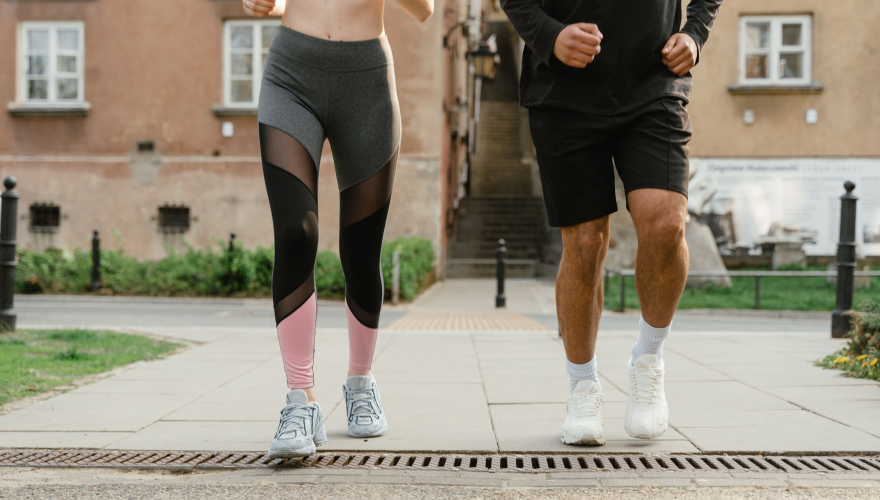
Stretch immediately after finishing your run while your muscles are warm and receptive. Taking 5 to 8 minutes to hold key lower-body static stretches cools down hypertonic tissues, relaxes the nervous system, and keeps your joints tracking smoothly.
Running is one of the most effective ways to build cardiovascular endurance, but the repeated impact can take a heavy toll on your joints. Each stride forces your knee to absorb forces equal to roughly three to four times your total body weight. Over miles of pavement or trail running, tight surrounding musculature can force the kneecap out of its smooth track, leading to persistent aching, stiffness, or sharp discomfort beneath or around the knee.
“The knee joint sits directly in the middle of two powerful leverage points: the hip and the ankle,” explains Mandeep Hayer, Lead Physiotherapist and Founder of Hayer Health. “When your quadriceps, or IT bands are excessively tight, they exert direct tension on the patella and patellar tendon. Over time, that pulling forces the joint to wear unevenly, which is why so many runners struggle with post-run aching.”
Taking just 5 to 8 minutes immediately following a run to lengthen key muscle groups drastically reduces joint pressure and post-workout stiffness. Here are four simple, highly effective knee stretches you can do at home or right at the end of your run to protect your joints.
Key Takeaways
- Post-run knee pain rarely originates within the joint itself; hypertonic quadriceps, hamstrings, IT bands, and calves pull on the patella, causing painful mis-tracking and increased friction during your stride.
- Executing targeted post-run static stretches immediately after workouts lengthens tight muscle fibers, reduces tension on the patellar tendon, restores smooth kneecap movement, and decreases compressive forces across the knee joint.
- Integrating a 5-to-8-minute post-run stretching routine alongside professional clinical support, such as physiotherapy gait analysis and active kinesiology reconditioning, treats underlying movement compensations to prevent chronic overuse injuries.
Standing Quadriceps Stretch
The quadriceps attach directly to the kneecap via the quadriceps tendon. When your quads remain tight after running, they compress the kneecap into the femoral groove, causing anterior knee pain (commonly known as runner’s knee).
How to do it: Stand upright with your feet hip-width apart, holding onto a wall or sturdy object for balance. Bend your right knee and reach behind you to catch your right ankle with your right hand. Gently pull your heel toward your glutes while keeping your knees aligned together and your torso upright.
Duration: Hold for 30 to 45 seconds per side.
Pro Tip: Keep your pelvis tucked slightly under (posterior pelvic tilt) and avoid arching your lower back to keep the focus purely on the rectus femoris muscle.
Half-Kneeling Hamstring Stretch
Tight hamstrings restrict knee extension and increase posterior joint tension. Stretching the hamstrings in a controlled half-kneeling position ensures full muscle extension without rounding your spine.
“When performing a hamstring stretch, most runners bend at their lower back instead of their hips,” says Mandeep. “Hinging correctly at the hip joint isolates the hamstring tendons right where they cross behind the knee, giving you a much more effective release.”
How to do it: Kneel on your left knee and extend your right leg straight out in front of you with your heel on the floor and toes pointing up. Place your hands on your hips or a wall for support. Keeping your spine long and chest elevated, gently hinge forward from your hips until you feel a pull along the back of your knee and thigh.
Duration: Hold for 30 to 45 seconds per side.
Pro Tip: Keep a micro-bend in your extended knee rather than locking the joint out completely to avoid overstraining the posterior joint capsule.
Standing IT Band and Lateral Hip Stretch
The Iliotibial (IT) band runs down the outside of your thigh and inserts just below the knee joint. Repetitive friction from a tight IT band can cause sharp, localized pain on the outer side of the knee.
How to do it: Stand tall and cross your right leg behind your left leg, planting both feet flat on the floor. Reach your right arm overhead and gently lean your torso toward the left side, pushing your right hip out to the side until you feel a deep stretch along the outside of your right hip, thigh, and outer knee.
Duration: Hold for 30 to 45 seconds per side.
Pro Tip: Press firmly into the outside edge of your back foot to deepen the stretch along the lateral fascial chain.
Wall Calf Stretch (Gastrocnemius Focus)
The calf muscle (gastrocnemius) crosses the back of the knee joint. Tight calves restrict ankle dorsiflexion, forcing the knee to collapse inward during foot strike and causing abnormal kneecap tracking.
How to do it: Stand facing a wall about arm’s length away and place both palms flat against it. Step your right foot back about two to three feet, keeping your heel pressed firmly onto the floor and your toes pointing straight forward. Bend your front left knee while keeping your back right knee completely straight.
Duration: Hold for 45 to 60 seconds per side.
Pro Tip: Ensure your back foot is pointed straight at the wall rather than turned outward to stretch both heads of the calf muscle evenly.
Why Kinetic Chain Balance Protects Your Knees
The knee is a hinge joint that relies on stability from above and below. When muscle groups along the kinetic chain become tight or imbalanced, the knee absorbs the excess stress:
- Overactive Quads and Tight Hips: Force the patella to rub against surrounding bone, exacerbating cartilage wear.
- Restricted Ankle Mobility: Causes hyper-pronation (flat foot strike), forcing the shin bone to rotate inward and torque the knee joint.
- Weak Glutes and Tight Lateral Hips: Cause the knee to cave inward (valgus collapse) during high-impact landing phases.
“In our practice, we always look beyond where the pain presents,” says Mandeep. “If a runner comes in with knee pain, we evaluate their hip stability, ankle dorsiflexion, and foot strike. Fixing the knee almost always requires balancing the joints surrounding it.”
Combining Home Stretches with Comprehensive Care
While a post-run stretching routine helps manage daily muscle tightness, persistent knee pain or recurring stiffness requires a comprehensive clinical evaluation.
At Hayer Health, our integrated clinical team addresses running injuries from every angle:
- Physiotherapy: Identifies tracking issues, assesses joint capsular restrictions, and uses advanced modalities like dry needling (IMS) to release stubborn muscle knots around the patella and hip.
- Registered Massage Therapy (RMT): Focuses on deep tissue therapy, releasing adhesions in the IT band, quadriceps, and calf complex to improve tissue mobility.
- Kinesiology: Kinesiologists like Manraj guide runners through targeted hip strength, single-leg stability, and movement retraining to prevent injuries from returning.
Frequently Asked Questions (FAQ)
What are the best dynamic stretches to do before a run?
Before heading out, prioritize active movements like leg swings, walking lunges with a torso twist, high knees, and butt kicks to warm up joint fluid and prime your muscles. These dynamic drills increase body temperature, improve hip and ankle range of motion, and prepare your nervous system without decreasing muscle power output. Spending 5 to 10 minutes on dynamic preparation readies your kinetic chain for impact and reduces injury risk far better than static stretching on cold muscles.
What stretching equipment is essential for a serious runner?
Serious runners benefit from a few versatile mobility tools, including a high-density foam roller or massage stick for soft-tissue release, heavy-duty resistance bands for active hamstring and hip mobility, and a stretch strap or slant board to deepen calf and Achilles angles. A lacrosse ball is also valuable for targeting deep glute and foot arch trigger points, helping maintain muscle elasticity between your clinical physiotherapy sessions.
What are the advantages of using compression socks for runners?
Compression socks apply graduated pressure up the lower leg, promoting venous blood return toward the heart, decreasing muscle vibration upon landing impact, and reducing calf fatigue during long runs. Wearing them post-run also helps accelerate metabolic waste removal and minimize tissue swelling, making them a simple, effective tool for quicker recovery between high-mileage training sessions.