What is the best way to prevent knee pain when hiking?
Before starting your hike, make sure to incorporate dynamic stretches that warm up your muscles rather than jumping straight into the ascent. Always bring enough water to stay hydrated, which helps your joints absorb impact. To effectively safeguard against injuries, work on building up strength in your quadriceps, glutes and hamstrings.
Vancouver is one of the best cities in the world to be a hiker. From the relentless vertical of the Grouse Grind to the sweeping coastal views on the Lighthouse Park loop, trails here range from casual afternoon walks to demanding all-day climbs. But for all the reward that comes with hitting the trails, hiking places significant and repetitive stress on the body, particularly the knees. Whether you’re a seasoned hiker clocking steep elevation gain every weekend or someone lacing up for the first time, knee discomfort is one of the most common reasons people struggle on the trail or cut trips short. The good news is that most of it is preventable, and when it does occur, it’s very treatable.
Here’s what you need to know.
What Causes Knee Pain When Hiking?
For most hikers, knee pain tends to be more of a problem on the way down than on the way up. The descent requires your knees to act as a brake for the rest of your body, absorbing the impact of each step against gravity while simultaneously stabilizing you on uneven, often rocky terrain. That combination of compressive load and repetitive motion is hard on the joint and the surrounding structures.
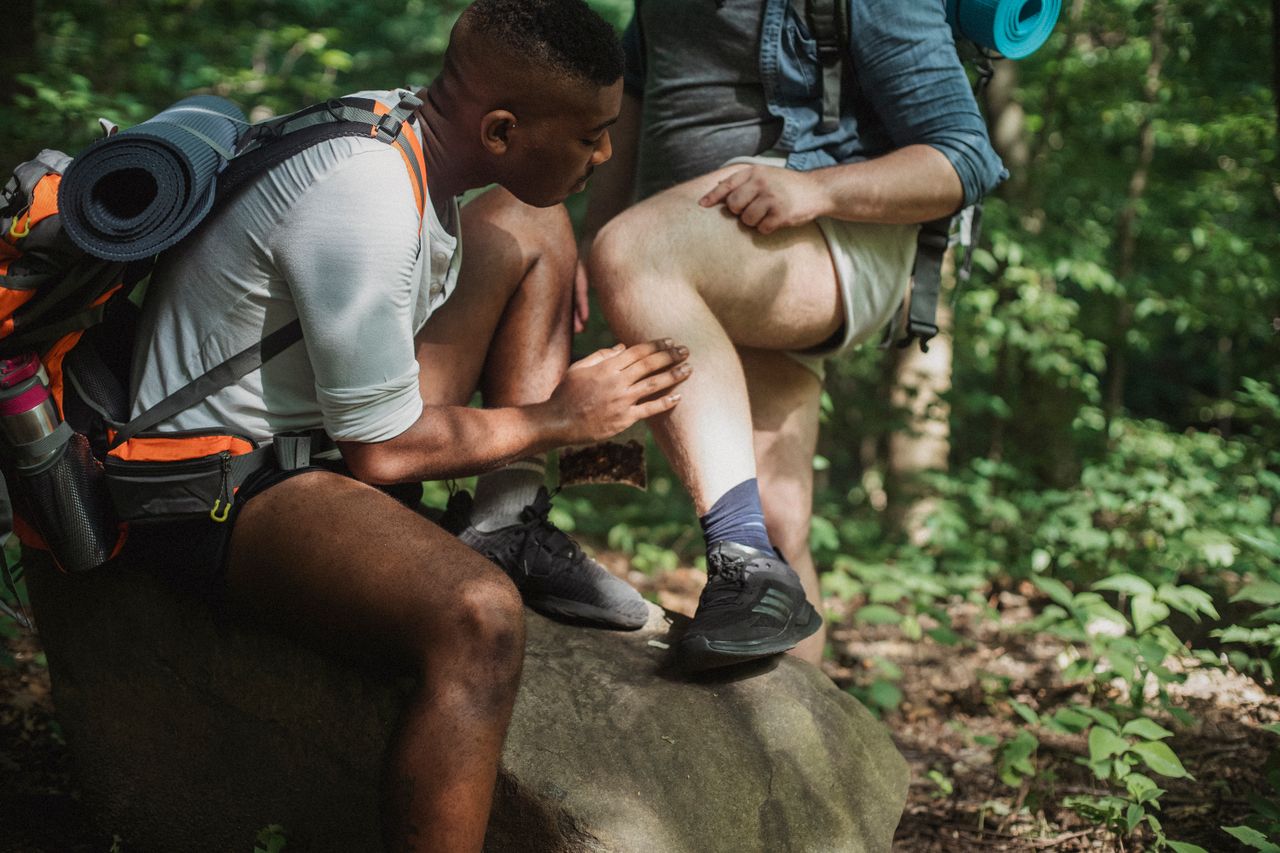
That said, knee pain isn’t exclusive to new hikers. Because the knees bear the majority of your body weight with every step, even experienced hikers are vulnerable, especially when they’re covering long distances, taking on steep trails, or returning after time off. The most common contributing factors include:
- Knee hyperextension: When the knee joint extends beyond its normal range, which is particularly easy to do on downhill sections
- Weak or imbalanced leg muscles: When the surrounding muscles aren’t strong enough to adequately support the joint, the knee compensates and absorbs more strain than it should
- Tight hip muscles: Limited hip mobility places additional demand on the knees to compensate during each stride
- Poor footwear choice: Shoes without adequate support or grip increase joint stress and instability on uneven terrain
- Previous injuries: Old knee, ankle or hip injuries can alter your gait in ways that quietly overload the knee
- Inadequate recovery time: Insufficient rest between hikes prevents the joint and surrounding tissue from fully recovering, allowing minor irritation to accumulate into a more significant problem
Continuously exposing your knees to prolonged impact without addressing these factors can contribute to conditions like patellofemoral pain syndrome (commonly known as runner’s knee) or aggravate pre-existing issues like arthritis or tendinitis.
Ways to Prevent Knee Pain
Preventing knee pain on the trail comes down to preparation, equipment and technique. The following are the areas we most commonly address with hikers who come to Hayer Health looking to stay active and pain-free on Vancouver’s trails.
Choosing the Right Footwear
Your footwear is your primary point of contact with the trail, and it makes more difference than most hikers realize. Hiking-specific footwear with ankle support, a firm midsole and a grippy outsole helps distribute impact more evenly and reduces the lateral instability that can stress the knee, particularly on loose or uneven terrain. Trail runners are a lighter option suited to well-maintained paths, while full hiking boots offer more support for technical or steep terrain.
Shoes that are too loose allow your foot to slide forward on descents, putting added pressure on the toes and knee. Look for a snug heel and a thumb’s width of space at the front. For hikers with flat feet or overpronation, a supportive insole can meaningfully reduce the strain transferred to the knee.
Strengthening Your Leg Muscles
Strong legs are one of the most effective long-term protections against knee pain on the trail. The quadriceps, hamstrings and glutes all play a role in absorbing the forces that would otherwise travel directly to the knee joint. When these muscles are weak or imbalanced, the knee ends up doing work it isn’t designed to handle.
Our physiotherapists recommend these exercises to build trail-ready strength:
- Squats and lunges: Build quad and glute strength while mimicking the mechanics of uphill and downhill hiking
- Step-downs: Particularly useful for simulating the eccentric load of descending; stand on a step and slowly lower your heel toward the ground with control
- Glute bridges and deadlifts: Target the posterior chain (hamstrings and glutes), which is often underdeveloped in hikers who experience knee pain
- Calf raises: Help stabilize the ankle and reduce impact forces travelling up through the lower leg
If you’re not sure where to start or suspect that muscle imbalances are contributing to your discomfort, our kinesiology team can conduct a movement screening and build a targeted exercise program around your specific needs.
Use Supportive Equipment
Trekking poles are one of the most underrated tools in a hiker’s kit. On descents especially, poles shift a significant portion of the load off your knees and onto your arms and upper body, reducing the compressive force on the joint by up to 25%. They also improve balance on loose or wet terrain, which reduces the compensatory movements that often lead to knee strain.
Knee braces are worth considering for hikers with a history of knee injuries, instability, or conditions like osteoarthritis. A compression sleeve can help with mild pain and swelling, while a more structured brace may be appropriate for those with ligament laxity or post-injury instability. If you’re unsure which type is right for your situation, it’s worth checking in with a physiotherapist before committing to one, as the wrong brace can sometimes alter your mechanics in unhelpful ways.
Maintain Proper Hiking Form
Form matters more than most people think, particularly on the descent. A few technique adjustments can meaningfully reduce the load on your knees:
- Shorten your stride going downhill. Longer strides increase the impact force on each step. Shorter, more controlled steps keep the load manageable.
- Keep a slight bend in your knee. Avoid locking the joint straight on impact. A soft knee absorbs force far better than a rigid one.
- Lean slightly forward. Counterintuitive as it feels, a mild forward lean on descents shifts weight distribution away from the knee.
- Step to the side of obstacles rather than over them where possible, to avoid awkward joint angles.
- Use switchbacks rather than taking the straight line down. The angled path reduces the gradient and the strain that comes with it.
Warm Up & Stay Hydrated
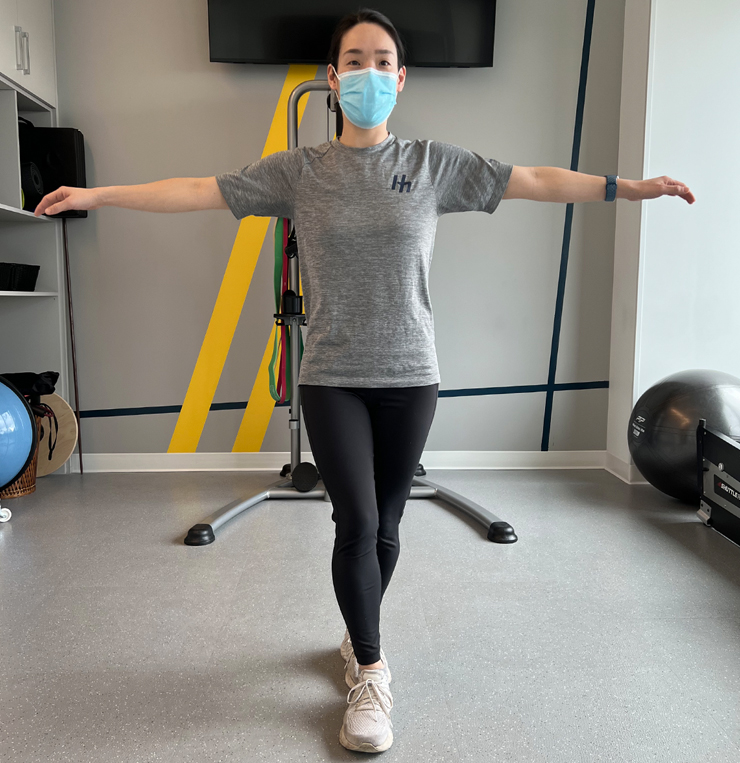
It’s tempting to start moving the moment you reach the trailhead, but taking five to ten minutes to warm up properly makes a real difference, especially for your knees. Dynamic stretches that move your joints through a full range of motion are more effective than static stretches before activity. Leg swings, walking lunges, hip circles and bodyweight squats all help increase blood flow to the muscles and prepare the joint for the demands ahead.
Hydration is equally important and frequently overlooked. Cartilage, the tissue that cushions your knee joint, depends on adequate fluid to function properly. Dehydration reduces its ability to absorb impact, increasing the stress placed on the joint over the course of a long hike. A general rule of thumb is to drink about half a litre of water per hour of hiking, adjusting upward in heat or at higher elevations.
How Physiotherapy Can Help
If you’re already dealing with knee pain on the trail, getting a proper assessment sooner rather than later is crucial. What feels like general soreness can sometimes be the early sign of a condition like iliotibial band syndrome, patellar tendinopathy or early-stage osteoarthritis, all of which respond much better to early intervention than to months of pushing through.
At Hayer Health, our physiotherapy team works with hikers and outdoor enthusiasts at all levels, from first-timers dealing with post-hike soreness to experienced hikers managing chronic knee conditions. Your first appointment begins with a comprehensive one-on-one assessment: we take the time to understand your movement patterns, hiking habits, and the nature of your discomfort before developing a treatment plan tailored to your goals.
Treatment may include manual therapy and joint mobilization to restore range of motion, shockwave therapy for tendon-related pain, dry needling to release tension in surrounding muscles, or a progressive strengthening program developed in collaboration with our kinesiology team. Our registered massage therapists can also play a valuable role in recovery to reduce soft tissue tension, improve circulation and ease the muscle fatigue that often contributes to joint strain over long hikes.
Our goal isn’t just to get you out of pain, it’s to make sure you’re moving well enough to enjoy every trail Vancouver has to offer. Book your initial assessment online today.
Frequently Asked Questions (FAQ)
How long will it take to recover from a hiking-related knee injury?
It depends on the nature and severity of the injury. Minor soft tissue irritation or mild tendinopathy can resolve in a few weeks with the right treatment and load management. More significant issues, such as an IT band injury, meniscus irritation or a ligament sprain, may take several weeks to a few months. The most important factor is getting an accurate diagnosis early and following a structured rehabilitation plan rather than resting and hoping it resolves on its own.
What are the best home remedies for minor knee aches and stiffness?
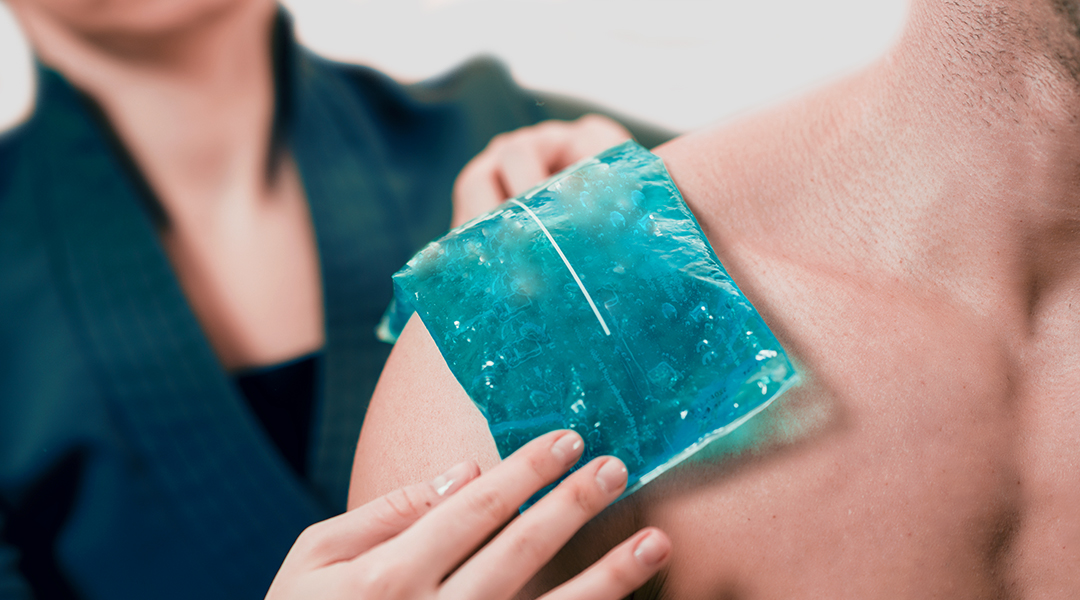
For mild post-hike knee soreness, the RICE method is a solid starting point: rest the joint, apply ice wrapped in a cloth for 15 to 20 minute intervals, use a compression bandage if swelling is present, and elevate the leg when possible. Gentle movement (such as short walk or some light mobility work) is generally better than complete rest for stiffness, as it encourages circulation to the area. Over-the-counter anti-inflammatories can help manage pain and swelling in the short term. If soreness is becoming a pattern after every hike, that’s worth addressing with a physiotherapist rather than continuing to manage it reactively at home.
What are the symptoms indicating a serious knee injury needing medical attention?
Seek professional care promptly if you experience any of the following: significant swelling that develops quickly after an injury, a popping or snapping sensation at the time of impact, an inability to bear weight or straighten the leg fully, visible deformity, or instability that makes the knee feel like it might give way. These can all be signs of structural damage that require proper assessment and imaging. At Hayer Health, our physiotherapists are trained to evaluate acute knee injuries and can refer you for imaging or to a specialist if needed.